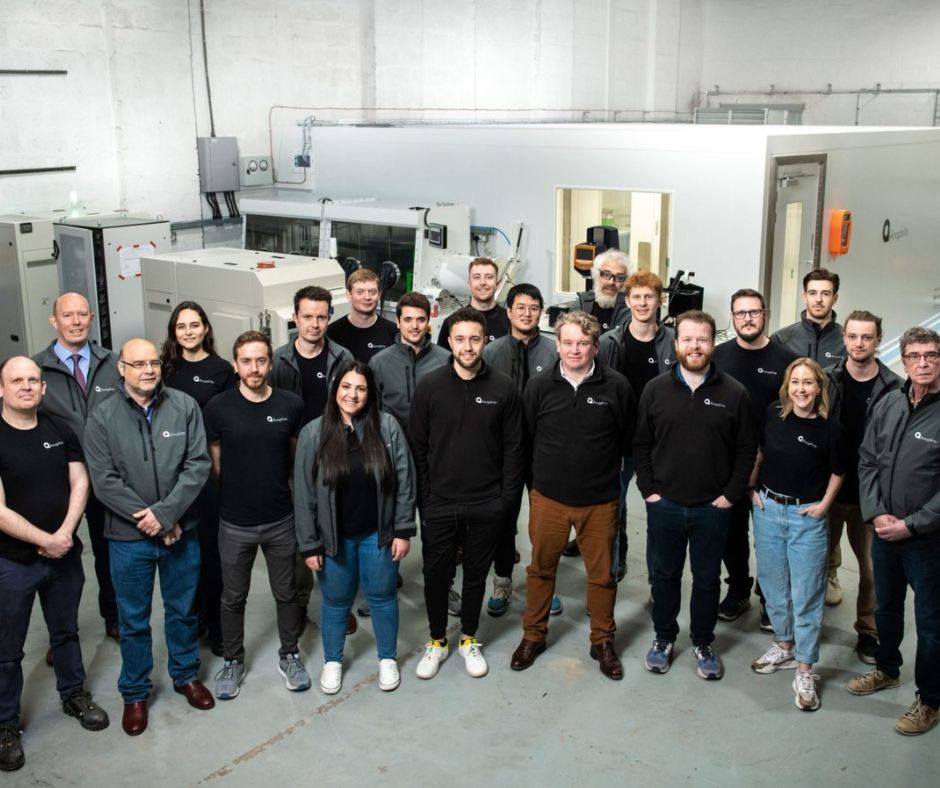


Anaphite, a Bristol-based startup with cutting-edge technology to reduce the cost and environmental impact of electric vehicle battery production, has raised £10.4m in its latest funding round. Founded in 2018 by chemist Sam Burrow and physicist Alexander Hewitt , the company has developed a chemical process that aims to transform the electrode production process in lithium-ion batteries.
Who were the key players in the funding round?
The £10.4m funding round was led by World Fund, a leading European climate tech fund, and Maniv, an Israeli venture capital firm focused on mobility and automotive tech. The round also saw participation from EEI, Nesta, Elbow Beach Capital, and Wealth Club. This injection of capital builds on Anaphite’s previous fundraising efforts, including a £1.6m combination of government grants and private investment secured earlier this year.
Notably, Joe Stevenson, former commercial director at Johnson Matthey, has joined as CEO to steer Anaphite’s next growth phase. With his leadership, the company aims to scale its breakthrough technology and expand commercial partnerships with EV and battery manufacturers.
What does Anaphite do?
Anaphite’s innovative process enables EV battery manufacturers to produce high-performance electrodes using 30% less energy and 15% of the factory space typically required. This reduction in space and energy consumption is a significant step forward in sustainable manufacturing, potentially leading to lower overall costs and carbon emissions for battery producers.This efficiency could prove vital as the demand for EV batteries increases, with manufacturers and governments pushing for decarbonisation in the automotive industry. Moreover, Anaphite’s technology extends beyond lithium-ion batteries, with potential applications in emerging battery technologies such as sodium-ion and solid-state, further diversifying the company’s growth prospects.

Short- and Long-Term Implications
In the short term, the fresh capital will likely be used to expand R&D and accelerate commercialisation. Anaphite could form key partnerships with major EV manufacturers to integrate its energy-efficient production techniques into supply chains, setting the stage for rapid growth. The focus on reducing costs and emissions will make the technology appealing to both environmental advocates and industry players facing growing regulatory pressures.
Longer-term, if Anaphite successfully scales its technology and capitalises on broader applications such as sodium-ion batteries, it could emerge as a major player in the global battery market. As global EV adoption increases, the demand for cheaper, cleaner battery production methods will only grow. Anaphite is well-positioned to address these needs.
Risks and Market Shifts
Despite the clear potential, Anaphite faces several risks that could impede its growth. First, the battery industry is highly competitive, and while Anaphite’s technology promises significant efficiency gains, it will need to continually innovate to stay ahead of established competitors. Additionally, scaling the manufacturing process to a commercial level could present unforeseen technical challenges.
Moreover, a potential shift back towards hybrid vehicles could pose another threat. With rising concerns over battery material shortages, some industry experts predict a temporary pivot back to hybrid cars as a stopgap measure. If hybrids regain popularity, this could temporarily reduce the overall demand for EV batteries, potentially slowing down the uptake of Anaphite’s technology.
However, the long-term trend remains in favour of electrification, and with its diversified focus on multiple battery technologies, Anaphite may be able to navigate market fluctuations effectively.